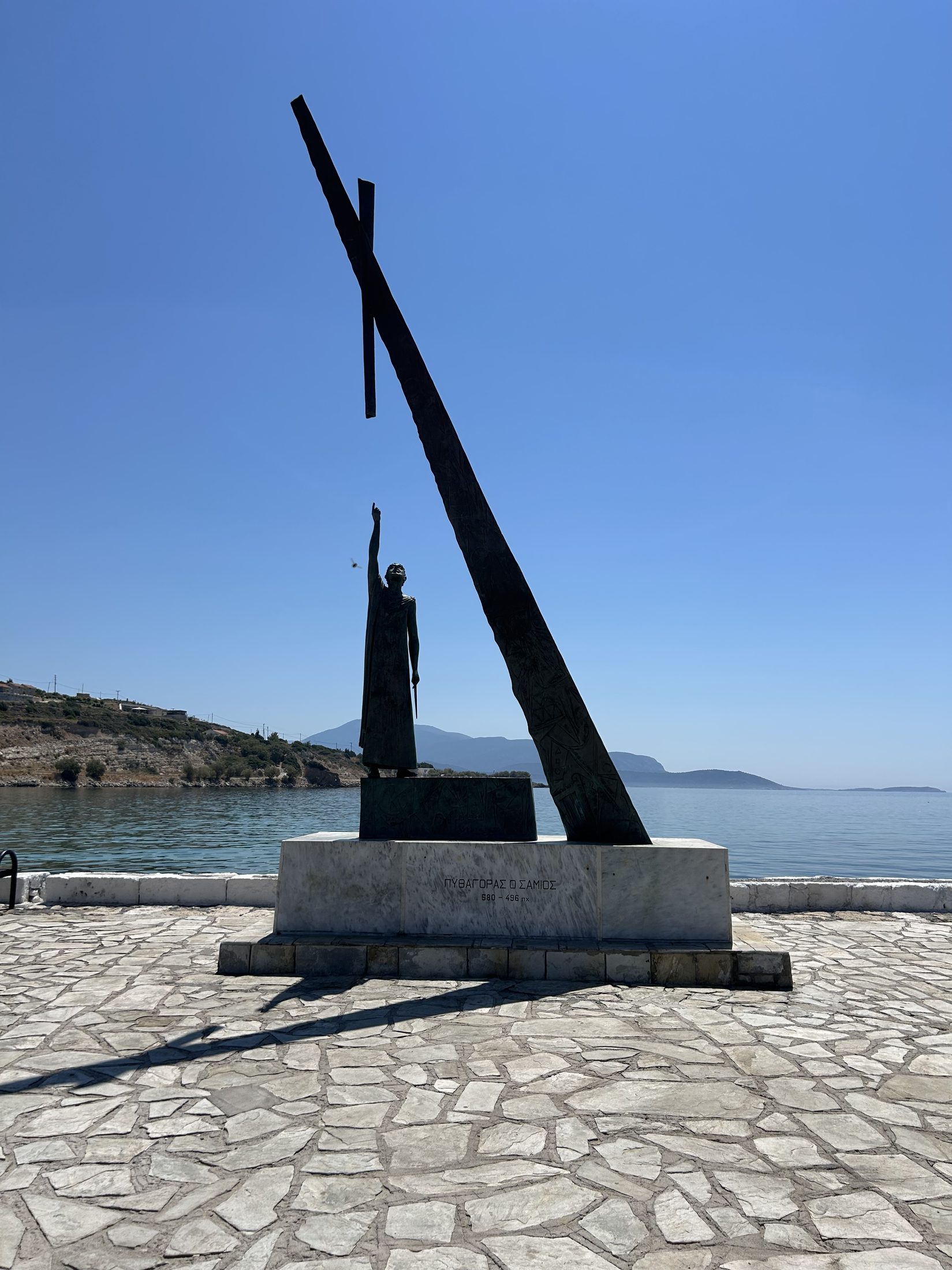
37.75° N · 26.98° E — Eastern Aegean, Greece
One operator. One pool. Run from a small Greek island, in support of a fairer, more decentralized Cardano.
On‑chain, right now
Pulled directly from the Cardano blockchain when this page loads — not hand-typed, never stale.
Why delegate
Delegating is simple, reversible, and never puts your ADA at risk. Here’s what backing SAMOS actually does.
Delegating never moves, locks, or risks your ADA. It stays in your wallet, under your own keys, the entire time — spend it, transfer it, or switch pools whenever you like.
Cardano is only as decentralized as the pools people choose. Delegating to a small, independent operator resists the concentration of stake in a handful of large pools.
Delegated ADA earns rewards roughly every 5 days, paid automatically to your wallet. Estimate your return with the official Cardano staking calculator.
SAMOS runs one pool, on our own hardware, and always will. No multi-pool empire, no ticket-farming — one operator standing behind one pool.
Our mission
“Twenty-five centuries ago, a mathematician from this island taught that the world could be understood through proof, not proclamation.”
We believe in a fairer, more decentralized model for global finance. Cardano earns that trust the same way Pythagoras did: through rigor. Its Ouroboros protocol is peer-reviewed, proof-of-stake research rather than a whitepaper written to chase a trend — academic in method, and a fraction of the energy cost of proof-of-work chains.
That approach also opens the network to anyone willing to run the software, not just those who can afford industrial mining hardware. SAMOS exists because of that opening: a single, independently run stake pool, based on the island that gave the world its first mathematician, supporting Cardano one block at a time.
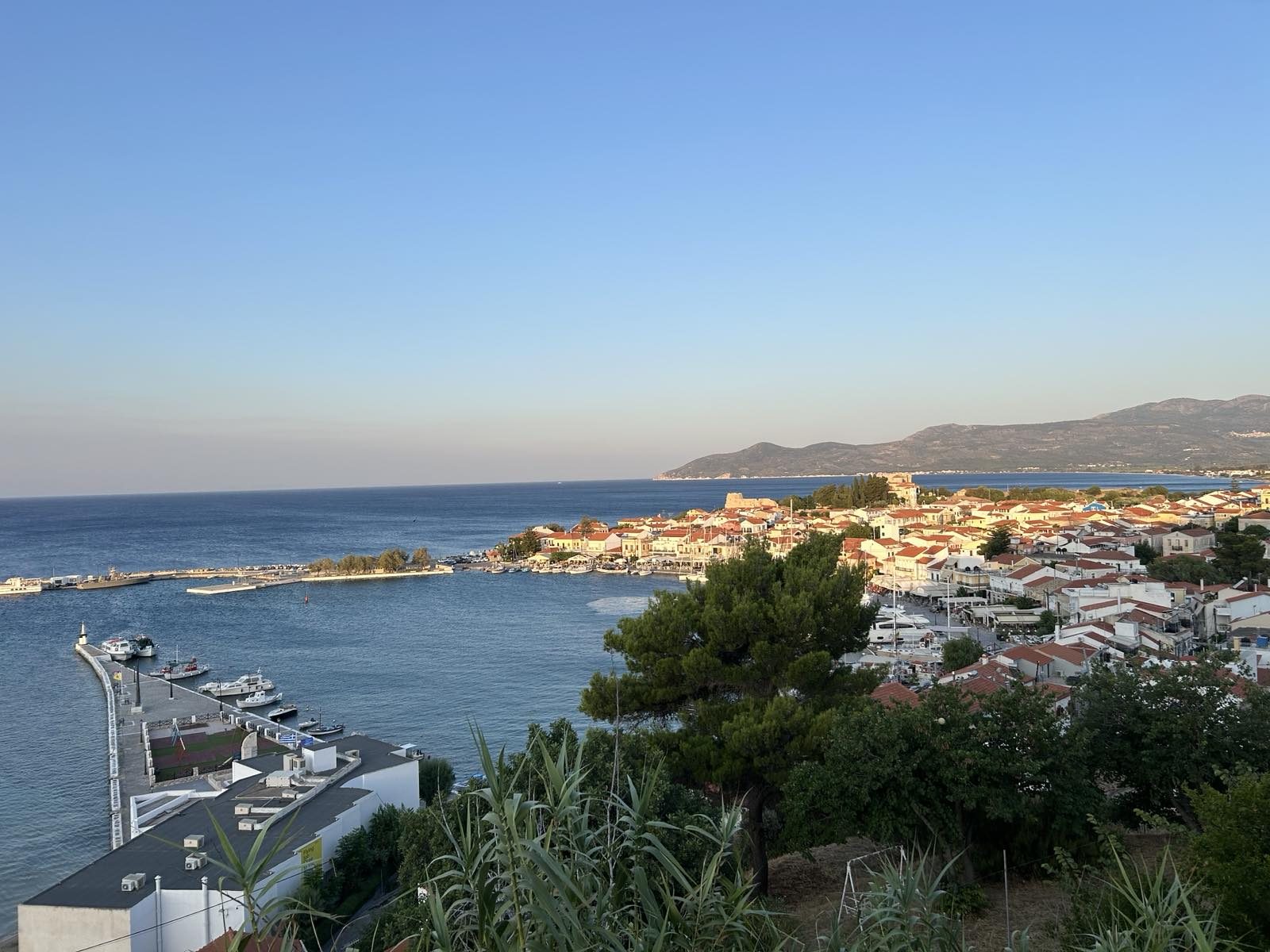
Where we operate from
Samos sits in the eastern Aegean, separated from the Turkish coast by the narrow Mycale Strait, between Chios to the north and Patmos to the south. In antiquity it was a prosperous, wine-trading city-state and the birthplace of the mathematician Pythagoras, the philosophers Melissus and Epicurus, and the astronomer Aristarchus, who argued — nearly 1,800 years before Copernicus — that the Earth revolves around the Sun.
Two of the island’s ancient sites, Pythagoreio and the Heraion of Samos with its Eupalinian aqueduct, hold UNESCO World Heritage status. The aqueduct itself is a small marvel of distributed engineering: two crews dug a tunnel through a mountain from opposite ends, meeting almost precisely in the middle, over 2,500 years ago.
Mediterranean summers here are hot and dry, winters mild and rainy — conditions well suited to solar power, and part of why we run our infrastructure with sustainability in mind. The island is also home to golden jackals, stone martens, wild boar, flamingos, and one of the Mediterranean’s last populations of monk seal.
Our journey
A small pool, building a track record one epoch at a time.
Samos Island gets its first Cardano stake pool. Registered on-chain in epoch 548 and open for delegation from day one.
SAMOS mints its first block on the Cardano blockchain in epoch 562 — the moment a stake pool starts earning its keep.
Still a single operator, still a single pool, kept running around the clock as a standing contribution to the decentralization of the system. Current standing is always visible in the live stats above.
New to this?
Cardano secures its network through Proof-of-Stake, not energy-hungry mining. Here’s the short version.
Cardano runs on Ouroboros, a proof-of-stake protocol: instead of miners racing to solve puzzles, the right to add the next block is assigned to stake pools in rough proportion to how much ADA is delegated to them. More delegation, more chances to produce blocks — and every block produced earns rewards for the pool and everyone delegating to it.
Delegating is not the same as depositing. Your ADA never leaves your wallet, is never custodied by SAMOS, and is never locked. You can undelegate, redelegate, or spend your ADA at any moment, with no penalty.
Rewards are calculated every epoch (about 5 days) and paid automatically to your wallet roughly two epochs later — no claiming, no manual steps. Returns vary with network conditions and pool performance, but have historically sat in the low single digits of annual percentage yield; check the official Cardano calculator for current estimates.
Choosing a pool is really choosing who you trust to run reliable, honest infrastructure — and how much you value keeping the network decentralized rather than concentrated in a few large operators.
Getting started
Three steps, a few minutes, one small network fee. No account, no sign-up, no KYC.
Install a light wallet such as Eternl, Lace, Yoroi, or Nami, and make sure it holds some ADA (a couple of ADA extra covers the one-off delegation fee).
Inside your wallet, find the staking / delegation screen and search for the pool by ticker or by pasting the Pool ID below.
Approve the transaction. Your ADA stays put; rewards begin arriving automatically within a couple of epochs.
Get in touch
Run by one operator, so you’ll hear back from the person actually running the pool — not a support queue.